
Can a Bitcoin Miner Heat Your Home?
Short answer: yes, and better than you would think. Why a miner is basically a heater already, what separates a space heater that mines from a miner that happens to get hot, and what it costs to run.

Here is the part that surprises people: nearly all the electricity a Bitcoin miner draws comes back out as heat. Not most of it. Nearly all.
A miner is just a computer working hard, and like any computer, the energy it uses does not vanish, it leaves as warmth. A 1,000-watt miner puts out about as much heat as a 1,000-watt space heater, because that is essentially what it is. The only difference is that while it warms the room, it is also earning Bitcoin. So the question was never whether a miner makes heat. It always does. The question is whether that heat lands where you want it.
Every miner is a heater. Most just waste the heat.
A miner in a garage blows its heat into a space nobody is in. A miner in your living room heats a space you are paying to warm anyway.
This is the difference between mining being expensive and mining paying for itself. If the heat is wasted, you paid for electricity and got only Bitcoin, minus the cost. If the heat replaces your normal heating, that same electricity did two jobs: it warmed your home, money you were going to spend anyway, and it earned Bitcoin on the side. Suddenly the running cost is not a mining cost at all. It is your heating bill, doing double duty.
Heat wasted is a cost. Heat you keep is your heating bill, mining for free.
You could point a normal miner at your room, but it would be loud, ugly, and awkward. A Bitcoin heater is built for the room from the start.
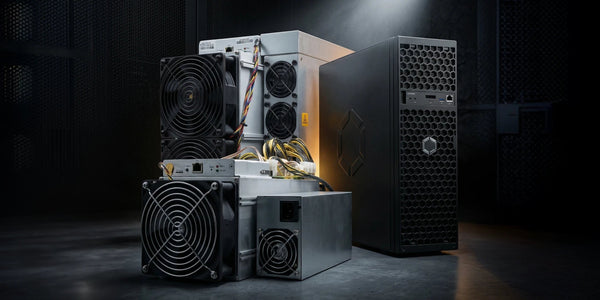
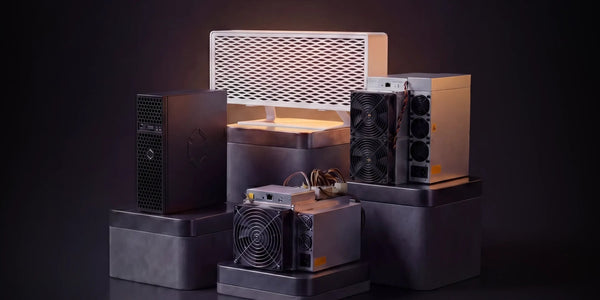
A standard miner is a screaming metal box designed for a warehouse. Put it in a living room and you will hate it within a day. A purpose-built Bitcoin heater, like our Ofen 2, wraps the same mining hardware in something meant to live in a home: quiet, safe to touch, controllable like a normal heater, and pleasant to have in the room. Same physics, keep the heat and earn the Bitcoin, but designed so you would actually want it where you live.
The maths is identical. The design is what makes it liveable.
The honest answer: about the same as running a heater of the same size, minus whatever Bitcoin it earns back.
A Bitcoin heater draws the wattage you would expect from an electric heater, and heats accordingly. On top of that, it mines, and the Bitcoin it earns offsets part of the running cost, and depending on your power price and the Bitcoin price, sometimes all of it. We will not throw a fixed figure at you, because it depends on your electricity rate and the market. But the shape is simple: you were going to pay to heat anyway, and this turns some of that spend into Bitcoin you keep.
You pay to heat. This pays you back in Bitcoin while it does.

A Bitcoin heater fits best exactly where you already use electric heat, and where the warmth will not go to waste.
If you heat a room, a workshop, or a home office with electricity for part of the year, that is heat you are already buying. A Bitcoin heater slots into that spend and starts earning against it. It makes less sense as a pure money machine in a hot climate with no heating need, and more sense the more you actually use the warmth. Match it to a space you want warm, and the Bitcoin is close to a bonus on a bill you already had.
The more you would have heated anyway, the better it pays.


Heating with a miner, at a glance
- Nearly all a miner's electricity comes back out as heat
- Waste that heat and mining is a cost; use it and your heating bill does double duty
- A Bitcoin heater is built for the home: quiet, safe, controllable, unlike a bare miner
- It costs about what a same-size heater costs, minus the Bitcoin it earns back
- Best where you already heat with electricity and will use the warmth

Found this useful?
Share it with someone weighing up their first miner.