
What Is a Mining Pool? And Should You Join One?
Mining alone, you could wait years to win a single block. A mining pool fixes that. Here is how pools work, how they pay, and how to pick one.

Alone, you could mine for years and win nothing
Bitcoin pays a reward only to the miner who wins a block, and blocks come roughly every ten minutes to a single winner out of the entire global network. On your own, one home machine might go years between wins, or never win at all. That is a miserable experience even when the long-run maths is perfectly fair. A mining pool exists to fix exactly this problem: it turns a rare, random jackpot into a small, steady income.
The pool does not change your total expected earnings. It changes how often you actually see them.
Everyone pushes, everyone shares the reward
In a pool, thousands of miners point their machines at the same operator and work on the network's puzzle together. When any member wins a block, the reward is split among everyone in proportion to how much work each one contributed, measured in shares. Contribute five percent of the pool's power and you earn roughly five percent of what the pool wins. You give up the dream of catching a whole block alone, and in return you get frequent, predictable payouts.
It is a co-op. Everyone pools their luck so nobody has to rely on their own.
Des milliers de machines travaillent ensemble sur le même problème. Quand le pool gagne un bloc, chacun est payé au prorata du travail fourni : les paiements arrivent souvent au lieu de presque jamais.
How pools pay, without the jargon
Pools use a few different payout methods, and you will see initials like PPS and PPLNS thrown around. The short version: some pools pay you a fixed amount for every share you submit, steady and predictable, with the pool carrying the risk. Others pay only when the pool actually wins blocks, which can be slightly higher over time but bumpier day to day. For most people starting out, the steadier style is the easier choice, and the differences are small next to your electricity cost.
Do not overthink the scheme. Cheap power matters far more than which payout model you pick.
What actually matters when you pick one
A handful of things separate a good pool from a bad one. Size and reliability, so blocks are won regularly and payouts stay consistent. A fair, clearly stated fee, usually a small percentage. Low minimum payouts, so your earnings actually reach your wallet instead of getting stuck. And a server located near you for a stable connection. Ignore any flashy promise of huge returns, because no pool can beat the underlying maths, they can only divide it fairly or unfairly.
Pick a large, transparent pool with a fair fee, and you have got ninety percent of the decision right.
A pool smooths your payouts, not your power bill
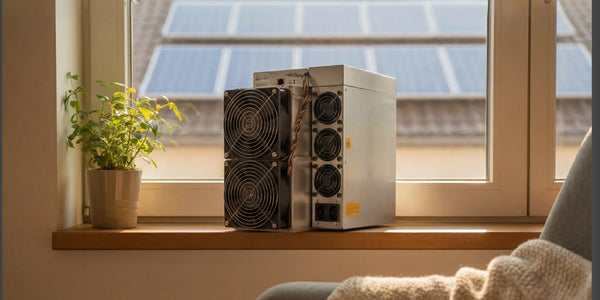
Joining a pool changes how often you get paid. It does not change what it costs you to mine. Your electricity price is untouched by any pool, and it is still the number that decides whether the machine is worth running at all. So before you spend time comparing fee structures, work out what your miner costs to run for a day and hold it against what the pool credits you. That comparison answers more than any pool ranking will. It is also why a machine that heats your home changes the sum: the power it draws is doing a second job rather than simply being spent.
A pool makes the payouts steady. What they are worth still comes down to your power price.


The 30-second recap
- A mining pool combines many miners so payouts come steadily, not rarely
- Rewards are split in proportion to the work each member contributes
- Payout schemes like PPS and PPLNS matter less than cheap electricity
- Choose a pool on size, reliability, fair fees, and low minimum payouts
- A miner that heats your home pays you in warmth regardless of the pool
Ready to buy? Pick your miner


Found this useful?
Share it with someone weighing up their first miner.