
Buying a Bitcoin Miner: The 2026 Guide
The three things that actually decide whether a miner is a good buy, how to read a spec sheet without drowning in it, and the one number that matters more than the machine itself. Then the part most buying guides leave out.

unsure which one? Dozens of models, plenty of conflicting advice. Here's how to cut through it.
Buying a miner is easy. Knowing what you're buying is the part that trips people up.
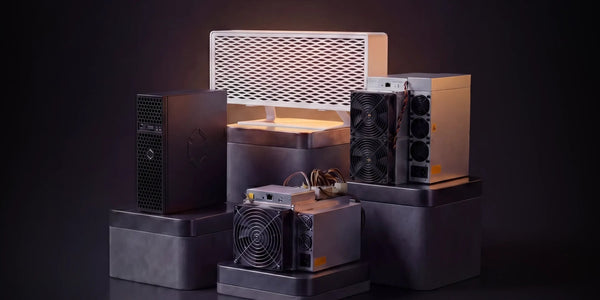
There are dozens of models, spec sheets full of numbers, and no shortage of sellers happy to move last year's hardware at this year's prices. But the decision comes down to three things, and none of them is the logo on the case: how efficiently the machine turns power into work, how much it costs you to run where you live, and who you're buying it from. Get those right and everything else is secondary. If you're new to this, what a Bitcoin miner is covers the basics, and how an ASIC miner works explains why a single purpose-built machine beats a room full of computers.
The machine matters less than how well it fits your power, your space, and your budget.
A spec sheet has twenty lines. Two of them decide whether you made a good buy.
Mining is guesswork at scale: a miner fires off trillions of guesses a second at a puzzle, and whoever lands the answer first earns the next block of Bitcoin. Two numbers tell you how good a machine is at exactly that.
- Efficiency (J/TH) How much electricity it burns per guess. Lower is better, and it's the single biggest thing separating a smart buy from an expensive one.
- Hashrate (TH/s) How many guesses it fires off each second, which sets how much it can earn. A strong 2026 machine pairs a high hashrate with low J/TH.
Everything else on the sheet is secondary. Efficiency has improved so fast that older miners burn noticeably more power for the same work. Whether an older model still pays off comes down to your electricity price, so run the numbers instead of judging it by the low sticker price alone.
Efficiency is what you're really buying. Hashrate is how fast it earns; J/TH is what it costs you to earn it.
Two miners with identical specs can be a great buy for one person and a money pit for another. The difference is your electricity price.
Mining is a simple trade: electricity in, Bitcoin out. So the price you pay per kilowatt-hour decides whether any miner is worth running, no matter how good its specs are. It's the one number the manufacturer can't print on the box, because it's yours, not theirs. Before you buy, run your real power price and the machine you're eyeing through the profitability calculator. It turns the spec sheet into an actual monthly number, and it will tell you more about your purchase than any review.
Run a miner for a few years and the power it burns usually costs far more than the machine ever did. That's why your electricity price, not the sticker price, decides the whole thing.
Buy the miner that makes sense at your electricity price, not the one that looks best on paper.
The same miner can come with a warranty and real support behind it, or with nothing at all. That difference is worth more than a small discount.
A miner is a serious piece of hardware that runs flat out, day and night. Things occasionally go wrong, and when they do you want a real seller behind it: a warranty, someone who actually answers, and spare parts. What to avoid isn't second-hand hardware, it's grey-market gear with no checks and nobody to call, often cheaper for a reason, where the saving vanishes the first time a board fails. Buying from a proper business in your own region also means clean paperwork, local shipping, and support in your language. It's why the Bitcoin miners we sell are either new or properly refurbished, backed by a warranty and real support.
A slightly cheaper miner with no support behind it is usually the most expensive one you can buy.
Most miners are built for warehouses, not living rooms. If yours runs at home, this is the spec nobody warns you about.
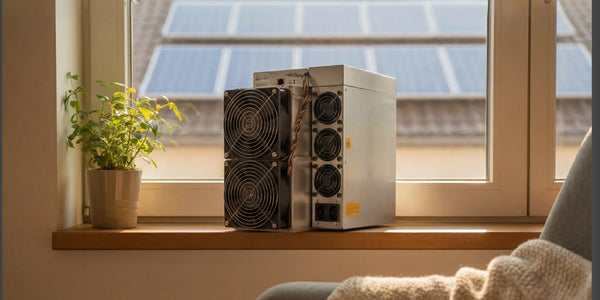
A standard air-cooled miner is genuinely loud, closer to a vacuum cleaner that never switches off than a home appliance. In a garage or a basement, that's fine. In an apartment, it's a dealbreaker. Before you buy, decide where the machine will actually sit, and be honest about who has to listen to it. If it needs to live in a home, look for a model built to run quiet. It's the difference between a miner you tolerate and one you forget is even on.
A standard miner is vacuum-cleaner loud, fine in a garage, rough in a bedroom. Around 50 dB is the line where it becomes something you can live with.
Pick the miner for the room it lives in, not just the numbers on the sheet.

Every guide obsesses over efficiency to shave a few cents off the power bill. Almost none mention that nearly all of that power comes back out as heat.
A miner turns electricity into Bitcoin and, along the way, into warmth: roughly a kilowatt of heat for a kilowatt of power, the same as an electric heater. Most setups blow that heat straight out a window and count it as pure cost. But if the machine is heating a room you'd have heated anyway, that electricity is doing two jobs at once, and its real price drops toward what you'd have spent on heating regardless. That's the lens the spec sheets miss: our Bitcoin heaters are built around it, mining and warming the same room on the same power. And they all run from our app, which handles the pool, payouts and settings for you, so setup is quick and effortless.
Judge a miner on efficiency, yes. Then remember the heat you were about to throw away is worth money too.
Run your miners the easy way with Port
Bought your first miner and don't fancy wrestling with pools and configs? Plug it into the Port and it handles the setup. The simplest way in, and it grows with you as you add more.
- Plug and play, running in minutes
- Up to 4 miners on one Port
- Automatic detection, real-time monitoring
- Control everything from one app


Buying a miner, at a glance
- Three things decide it: efficiency, your power price, and who you buy from, not the brand
- Read two numbers: J/TH for cost per guess (lower is better), TH/s for how fast it earns
- Run your real electricity price through the calculator before you spend anything
- Buy from a real seller with warranty and support, new or properly refurbished, not a grey-market discount
- Match the noise to the room, and remember the heat is worth money if you capture it
Ready to buy? Pick your miner


Found this useful?
Share it with someone weighing up their first miner.